
Saturday, February 19, 2011

Tuesday, December 14, 2010
End the segregation of Romani children in Slovakia’s schools

The Amnesty International Zurich English Group is taking action on behalf of the thousands of Romani children across Slovakia who remain trapped in substandard education as a result of widespread discrimination and a school system that keeps failing them.
What we did
We sent a letter to the Slovak authorities, urging them to take the necessary measures to respect, protect and fulfil the right to education free from discrimination for all children and to end racial segregation in education.
We also signed colourful keys, which we have sent to the Slovak authorities. These keys symbolize the following:
- They remind the government that it holds the key to allow the Roma in Slovakia full participation in Slovak and European society.
- We want them to unlock and open up the doors in situations in which Romani children from kindergarten onwards are sometimes locked into separate classrooms, corridors or buildings, separated even at lunchtimes, to prevent them from mixing with non-Romani children.
Background
Segregation of Romani children takes various forms: in several districts, Romani children attend ethnically segregated mainstream schools and classes that often operate reduced curriculums.
In regions with large Romani populations at least three out of four children in special schools designed for pupils with "mild mental disabilities" are Roma; across the country as a whole, Roma represent 85 per cent of children attending special classes. Yet, Roma comprise less than 10 per cent of Slovakia’s total population.
Slovakia’s mainstream elementary-school system is ill-equipped and education professionals are often unwilling to provide the additional support that pupils from different ethnic and social backgrounds often need.
For many Roma, Slovak is not a first language. Cultural differences and high levels of poverty among Roma mean that they often need additional language, pre-school or classroom assistance. When these needs are not met, many Romani children fall behind and are transferred out of mainstream education – either to special classes in mainstream schools or to dedicated special schools.
Romani children who are placed at special schools or classes have very little chance of being reintegrated in mainstream education. Additionally, when pupils finish elementary school under a special curriculum, they receive lower graded certificates, which restrict them to attending special-secondary school. This involves a programme of two or three years’ vocational training to become, for example, butchers, bricklayers, shoemakers, domestic workers or gardeners.
Discrimination and segregation in Slovak schools exclude Roma from full participation in society and lock them into a cycle of poverty and marginalization.
Slovakia’s 2008 Schools Act bans all forms of discrimination, particularly segregation. But it fails to clearly define segregation, or include robust guidelines and measures to help education authorities identify and monitor segregation and enforce desegregation. Effective measures to implement the ban have yet to be put in place.
The new government’s recently stated commitment to eliminate segregated schooling of Roma, included in the coalition government’s programme adopted in August 2010 is, however, a welcome development.
The Slovak government has much to do to end the segregation that has an impact on a large part of the country’s population. Segregation in education means a life-long stigma for children whose future chances are brutally limited. The choices that the government makes now will affect the lives of thousands of Romani children. The government holds the key to allow the Roma in Slovakia full participation in Slovak and European society.
Friday, November 5, 2010
AI in Pub Treasure Hunt
As part of the Zürich Pub Treasure Hunt about 120 people passed by and received the following questions (among others):
1. What does 48626 744487 say? Name 2 of these you are using now.
2. Why would you contact Marz?
Do you know the answers? If not, scroll down.
Almost all of the participants successfully spent some time thinking about AI or related subjects, answered the questions right and some took the flyers home.


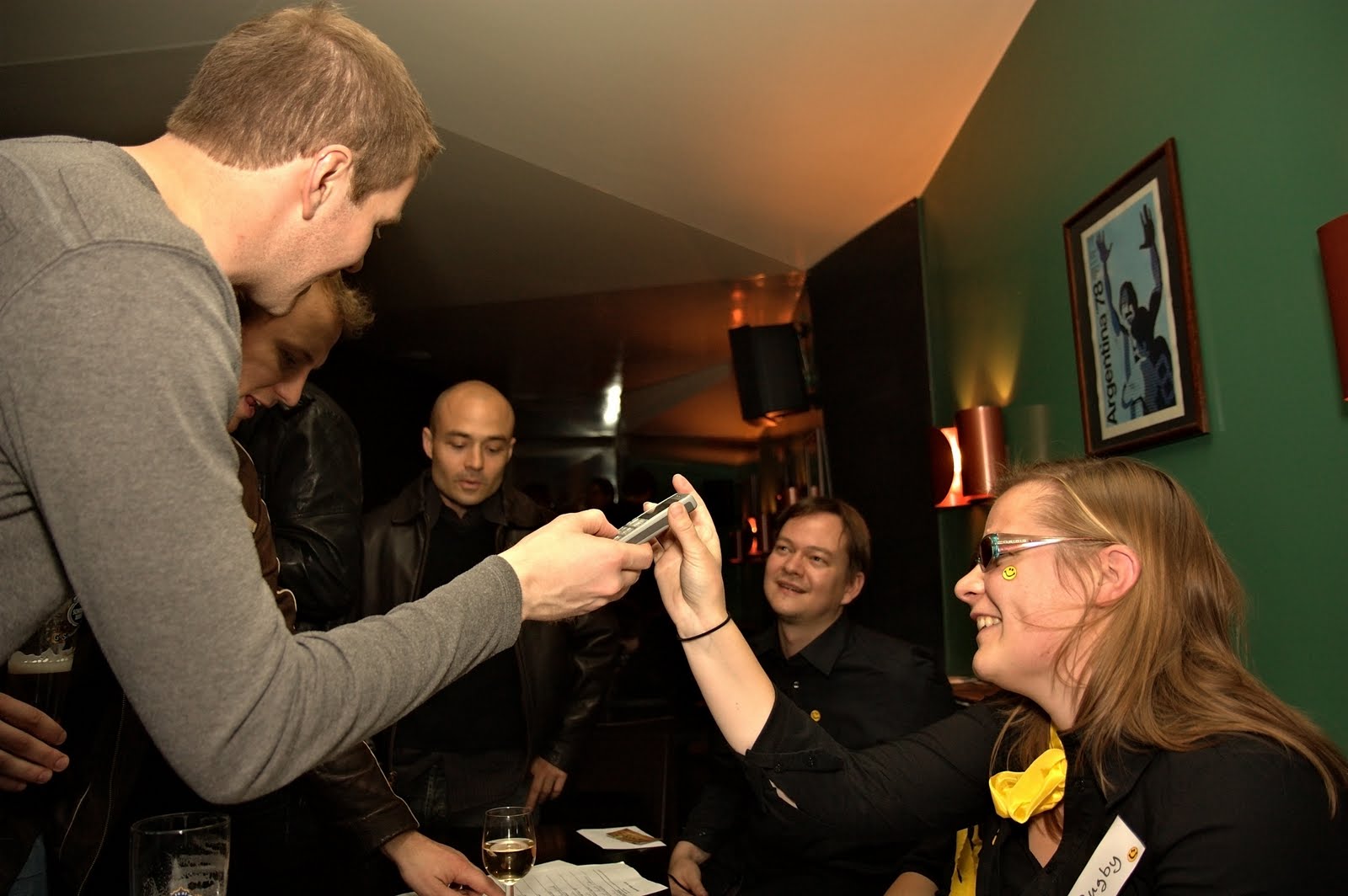

1. Human Rights (on your phone), e.g:
- Freedom to move
- Right to public assembly
- Right to play (/rest)
2. To have more information about the Englich AI Zürich Group
Wednesday, September 29, 2010
Update on Imprisoned Russian Human Rights Defender
On September 9, 2010, Aleksei Sokolov was transferred from a remand centre in Novosibirsk to Krasnovarsk Region where he is due to serve his sentence. His family does not know yet which prison colony in Krasnovarsk Region he was sent to.
Until Amnesty International knows which prison colony he has been sent to, it is not possible to send Aleksei Sokolov letters of support. However, our support is very important for Aleksei Sokolov. His wife told an Amnesty International activist:
‘Every member of Amnesty International is a friend to Aleksei. He could only hold on during this year and a half thanks to your words of support, your letters, cards and your actions.’
As Aleksei Sokolov is at imminent risk of torture and other ill-treatment, Amnesty International Zurich English Speaking group is continuing to write to the authorities, asking them to bring about the following:
- to ensure Aleksei Sokolov's second appeal is given a full and fair hearing
- to ensure he is not subjected to torture or other forms of ill-treatment while in custody
- to ensure that he is given daily exercise and nutritious food, and is given his correspondence while in custody
- to transfer him to a detention centre closer to his home in the city of Yekateringburg where it is easier for his family and legal team to maintain close contact with him
- to conduct a prompt, thorough and impartial investigation into allegations that he has been beaten by prison guards while being held in a remand centre in Novosibirsk, Western Siberia, and to bring those responsible to justice
Amnesty International continues to believe that Aleksei Sokolov is a prisoner of conscience detained solely for the peaceful exercise of his right to freedom of expression in the course of his lawful human rights activities in Russia. He should be allowed to pursue his lawful activities as a human rights defender in Russia without fear of repercussions.
Wednesday, September 8, 2010
UPDATE: Russian human rights defender beaten
Russian human rights defender Aleksei Sokolov is at risk of torture or other ill-treatment. He is currently held in a remand centre in Novosibirsk, Western Siberia, where he has allegedly been beaten by prison guards. In the coming days he is due to be transferred to a prison in the Krasnoyarsk region of Siberia, thousands of kilometres from his home. He remains at risk of further torture and ill-treatment.
Aleksei Sokolov, the head of a Russian human rights organization, was sentenced to five years' imprisonment in May 2010 for theft and robbery. His sentence, which was imposed after a trial held with several reported violations of fair trial standards, was reduced to three years' imprisonment on appeal. His lawyers are planning a further appeal. Amnesty International is concerned that Aleksei Sokolov may be a prisoner of conscience, targeted for his human rights work.
According to his lawyers, Aleksei Sokolov has been ordered to serve his sentence in Krasnoyarsk, more than 2,000 kilometres from the city of Yekaterinburg, where he lives and where he has been held until 25 August. On 26 August, he was transferred to the FGU IZ-54/1 remand centre in Novosibirsk, located between Yekaterinburg and Krasnoyarsk. Local sources have reported to Amnesty International that shortly after his arrival in Novosibirsk, he was beaten up by prison guards and that he has also been placed in solitary confinement for several hours. Amnesty International is concerned that Aleksei Sokolov could face similar treatment in Krasnoyarsk.
Amnesty International is concerned that sending Aleksei Sokolov to serve his sentence far from his home does not comply with international human rights standards requiring that prisoners should serve their sentence close to their home whenever possible, in particular to allow for family visits. Aleksei Sokolov’s transfer to Krasnoyarsk prison colony also makes communication with his lawyers more difficult, which might violate his right to receive a fair hearing of his intended second appeal. The decision to send him to Krasnoyarsk was allegedly given in a special directive from the Russian Prison Service received by the prison authorities in Yekaterinburg shortly after his sentence was reduced on appeal.
For further information, please see: Russian Federation: Further information: Russian human rights defender beaten: Aleksei Sokolov (EUR 46/031/2010), September 2010.
Thursday, August 26, 2010
Russian Human Rights Activist Aleksei Sokolov
Amnesty International is concerned that Aleksei Sokolov may be a prisoner of conscience detained solely for the peaceful exercise of his right to freedom of expression in the course of his lawful human rights activities.
Demand a Fair Appeal for Aleksei Sokolov
Human Rights Activist Aleksei Sokolov was sentenced on 13 May 2010, to serve five years in a high security prison colony for theft allegedly committed in 2001 and for robbery allegedly committed in 2004. The court found him not guilty in another robbery he was charged with.
His appeal was to be heard on 16 July 2010 but the Sverdlovsk Regional Court postponed the hearing until 18 August 2010. The official reason for postponing the hearing was that allegedly, Aleksei Sokolov’s co-defendents did not have lawyers to represent them. However, his defence team think that the real reason behind it could be the international and media attention on the case.
According to Aleksei Sokolov’s lawyers, the Bogdanovich town court in the Sverdlovsk region of Russia based its verdict solely on the statements of the co-accused in the case who are already serving prison sentences for other crimes. During the trial, the defence lawyers pointed out that these statements often contradicted each other as well as earlier ‘confesions’ of the co-accused. One of his lawyers said that while victims of the crimes identified the other defendants in the case as possible perpetrators of the crime, none of them identified Aleksei Sokolov. The court nevertheless considered there to be enough evidence to convict Aleksei Sokolov.
Aleksei Sokolov’s lawyer also reported a number of violations of criminal procedure in the handling of the case throughout the pre-trial and trial stage.
Risk of Torture and other Ill-Treatment
Torture and ill-treatment in places of detention in Russia is a serious issue of concern to Amnesty International. Aleksei Sokolov is one of those human rights activists who campaigned against and exposed cases of torture and other ill-treatment in prison colonies and by the police in Sverdlovsk Region.
Sources close to Aleksei Sokolov have told Amnesty International that his detention conditions have deteriorated. According to reports, his diet is very meagre and, allegedly, the food that his family sends to him is being confiscated or chopped up so much that it becomes inedible. These sources also report that the length of his walks has been shortened to half an hour each day.
Human Rights Activities
Aleksei Sokolov is a founder and the head of the Russian human rights organization Pravovaia Osnova (Legal Base) which campaigns against torture and other ill-treatment of detainees in the Russian Federation. The work of Legal Base brought about several investigations against law enforcement officers on allegations including the use of torture to coerce suspects to "confess."
Aleksei Sokolov became prominent after he publicized and distributed a film about torture and other ill-treatment in a temporary holding centre in prison colony IK-2 in Yekaterinburg. The film received wide coverage, both in Russia and internationally, and led to the closure of the temporary holding centre.
He was also investigating possible corruption in some law-enforcement agencies in Yekaterinburg: some officials, according to his findings, had helped to cover up impunity in the temporary holding centre in Yekaterinburg.
In 2008 Aleksei Sokolov was appointed a member of the Public Commission for the control of places of detention and conducted a series of visits to detention facilities in this capacity. He got suspended from this position following his detention in May 2009.
In 2008 he learned that several prisoners were being pressured into claiming falsely that he had been involved in crimes including the robbery in 2004, on suspicion of which he has been in custody since 13 May 2009. Investigations into the theft in 2001 and the robbery in 2004 had been closed several times because the perpetrators could not be identified, but were re-opened shortly before Aleksei Sokolov’s arrest.
When in July 2009 the Sverdlovsk Regional Court ordered that he should be discharged until his trial, instead of being released, the police told him that he was then arrested on suspicion of another robbery committed in 2004. Later prosecution added charges of theft of metal pipes from a factory in 2001.
Shortly after his detention, police allegedly threatened to torture him because of his work in defence of human rights.
For further information, please see:
Russian Federation: Demand a Fair Appeal for Aleksei Sokolov: Further Information (Index EUR 46/016/2010), May 2010; Russian Human Rights Defender Jailed for Five Years, May 2010; Russia Must Stop Persecution of Rights Activists, December 2009.
Monday, August 9, 2010
Eritreans at risk of forcible return from Libya after detention centre disturbances
The Eritreans, who include refugees and asylum seekers as well as migrants, are currently held at al-Birak, a detention centre in Sabha, where they are reported to be subject to beatings and other ill-treatment."